
Board Advisory
Board AI Advisory
Directors are being asked to govern AI they haven't been equipped to govern. We change that — and we deliver the frameworks that make it stick.
Boards need a clear account of how AI is used and what decisions require their attention. Management should be able to explain the evidence.
Liability depends on the facts, the applicable law and the organisation’s role. Directors should obtain advice on their duties and the oversight required. AI Act obligations depend on the organisation’s role and the system’s intended use. Directors also need to consider their wider governance duties.
The context
What boards are facing
Boards are being asked to approve AI strategies, sign off on AI risk, and take accountability for AI outcomes — often without a briefing, a framework, or a clear picture of what is actually in use across the organisation.
Boards need enough information to assess proposed AI uses and oversee existing ones. Management should explain the applicable obligations, who owns each use and how errors or incidents will be handled.
What we deliver
What we deliver
Board briefings
A structured session that gives directors a clear picture of AI exposure across the organisation, the regulatory obligations that apply, and the questions they should be asking management. Delivered and done — not a starting point for a dependency.
Governance frameworks
Responsibilities, oversight policies and AI risk controls tailored to your organisation. Implementation scope, ownership and timing are agreed with your team.
Director education programmes
Sessions that help directors understand AI use, question management and assess the evidence behind proposed decisions.
EU AI Act liability briefings
A clear, jargon-free account of what your board’s obligations are, which AI systems in your organisation are in scope, and what documented governance you need to have in place for the obligations applicable to your organisation.
Board-level oversight tools
The language, frameworks, and question sets that allow directors to hold management to account on AI without being dependent on management for the interpretation.
Proof
What this has looked like in practice
Board session preparation
Advisory work has included preparing board material on AI decisions, oversight and questions for management. Public examples omit the organisation and its private working material.
Long-document guidance
A tailored guide addressed how teams work with lengthy documents and check AI-assisted outputs. The delivered guide supports a claim about advice provided, not a measured productivity result.
Policy review
A position note examined whether AI policy matched approved tools and working arrangements. Recommendations remained subject to the organisation's review and approval.
Experience
Grounded in boardroom experience
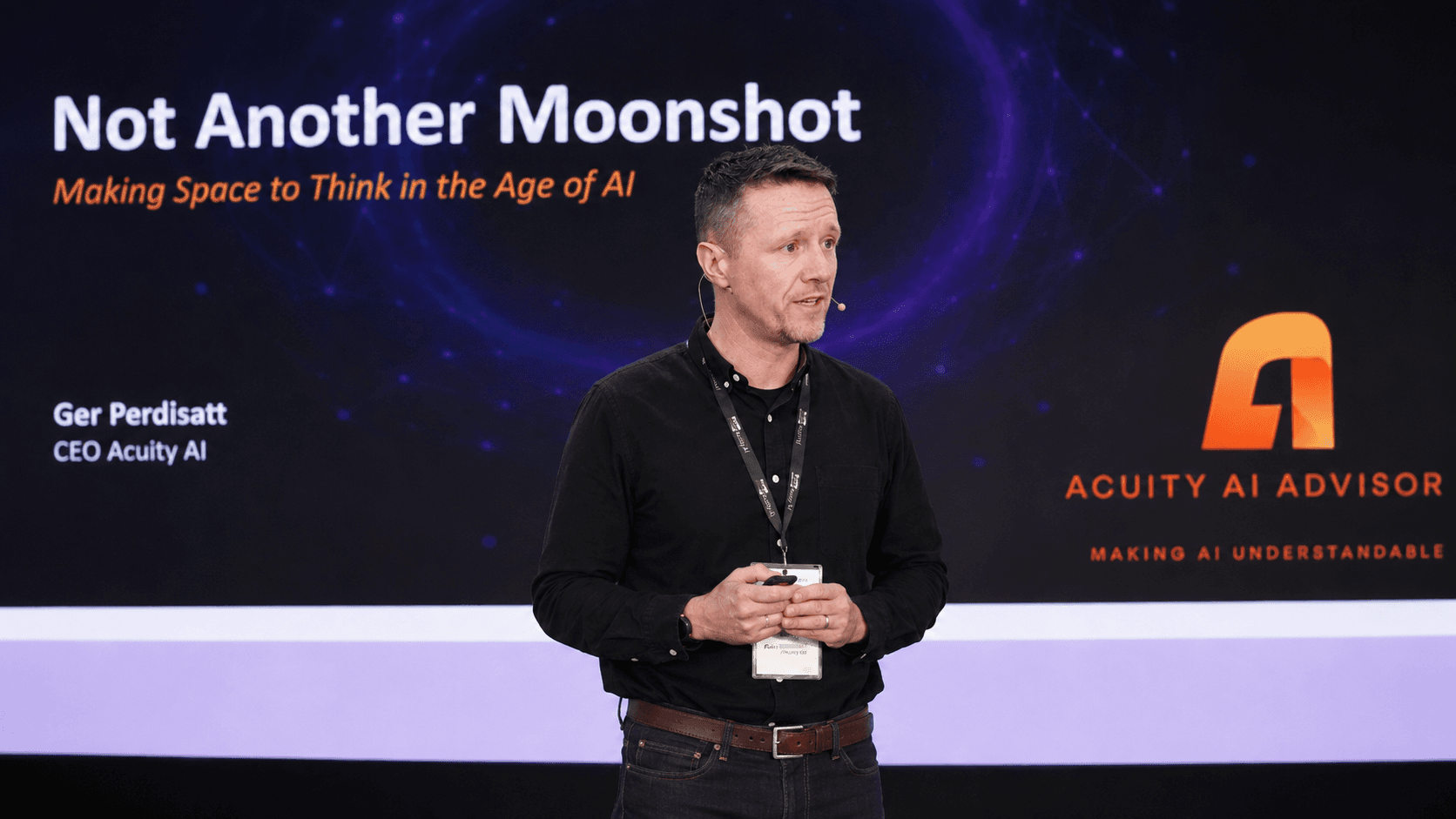
Ger Perdisatt is a current Non-Executive Director at Dublin Airport Authority — where he chairs the Strategic Infrastructure & Sustainability Committee overseeing a €5bn capital programme — and at Tailte Éireann, the national land registry, mapping, and valuation authority.
Board advisory is not a service line built on theory. It is grounded in what it actually takes to govern a complex organisation — and what directors need to hear, as distinct from what they are typically told.
Ger Perdisatt — NED credentials
FAQ
Common questions
What are board directors' responsibilities under the EU AI Act?
The AI Act places obligations on providers and deployers according to the system and its intended use. A board should understand the organisation’s role, require appropriate oversight and obtain legal advice on directors’ duties and liability. Liability depends on the facts, the applicable law and the organisation’s role. Directors should obtain advice on their duties and the oversight required.
How should a board approach AI governance?
Start with a clear inventory of what AI is actually being used across the organisation — which is rarely what the board has been told. From there, build the accountability structures and oversight mechanisms that allow directors to exercise genuine governance rather than rubber-stamp management decisions. Acuity typically delivers a governance framework, a set of board-level oversight questions, and a director education component. The framework is built and deployed — not handed over as a document for someone else to implement.
What questions should a board ask management about AI?
What AI systems are we currently using or developing? Which are classified as high-risk under the EU AI Act? Who is accountable for each system's performance and compliance? What is our process for reviewing AI before deployment? Have we assessed the liability implications of AI errors or failures? What is our position if an AI system causes harm to a customer, employee, or third party? These are the questions that create the accountability structure. The advisory work helps boards obtain and assess those answers.
Do non-executive directors need specialist AI knowledge?
No. Directors need sufficient literacy to ask the right questions, identify red flags, and hold management to account — not to understand the technology. The gap for most boards is not technical understanding. It is the language and frameworks to exercise effective oversight. That is what the advisory work delivers.
Arrange a Board AI Briefing
A structured conversation about where your board stands and what it needs. No preparation required on your side.